The habit table that shows the days you skipped
by Andreas Tissen · · updated
Habit apps are built around streaks, and a streak is a motivational device rather than an instrument. The counter counts the days you turned up and resets to zero on the first day you did not, so the record of your failures is precisely the part that gets deleted.
The failures are the data. A habit that survives four good weeks and dies in the fifth has something interesting in the fifth week, and no streak counter will ever show it to you.
Seven days and some blanks
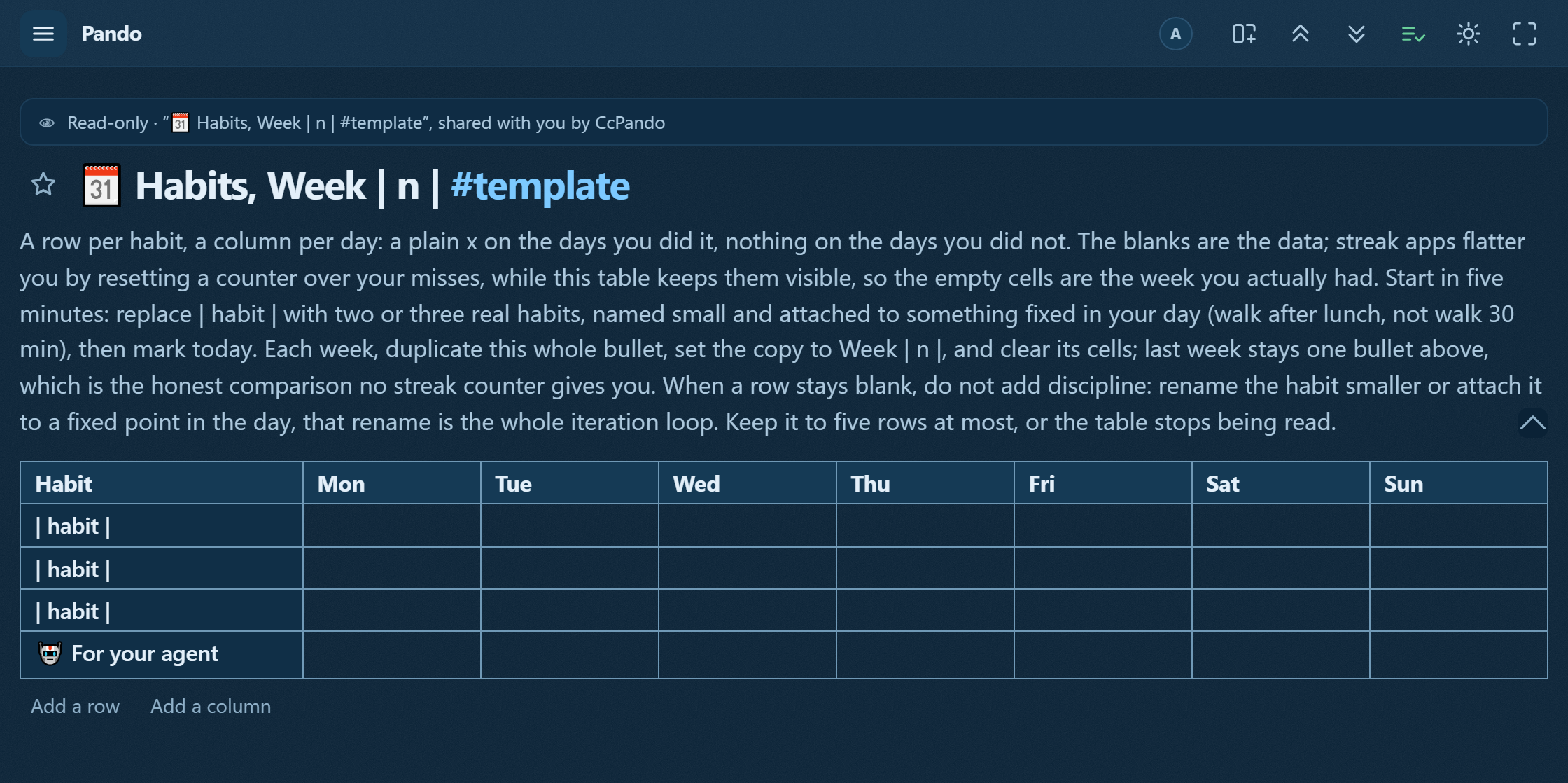
A row per habit, a column per day, an x or nothing. That is the whole instrument, and its virtue is that the blanks are as visible as the marks.
Three seconds with the picture and you know more than a month of streak history: the writing habit is real, the walking habit is weekend-shaped, and "no screens after 22:00" is not a habit at all yet, it is an intention with one lucky Friday.
What to do with a bad row
Not more discipline. Two questions:
Is the habit too big? "Walk 30 min" fails on days with no 30 free minutes. "Walk after lunch" fails only on days you do not eat.
Is it attached to anything? The habits that survive are attached to something already fixed in the day. The floating ones die.
Both fixes are edits to the row's name, which takes five seconds in a table and is the entire iteration loop of habit-building.
Keep it to five rows, and start a new table each month
More than five rows and the table stops being read. And a fresh table per month is what makes the comparison possible: last month's is still there, one bullet above, and the honest question is whether this month looks better than that one.
A streak counter has no way to show that comparison, because it only ever holds the present run.
Why the same tree as everything else
Because the interesting correlation is not inside the habit table. It is between the table and the rest of your week: the fortnight the writing habit collapsed is the fortnight the kitchen project was in crisis, and both are in the same outline, a screen apart.
An agent reading both branches can say that sentence for you, and that is the part worth delegating: not the ticking, the noticing.
Take the table
Open the template, press "Show in my Pando", and put three habits in it. Not eight. Three, for one month, and then look at the blanks rather than the marks.